
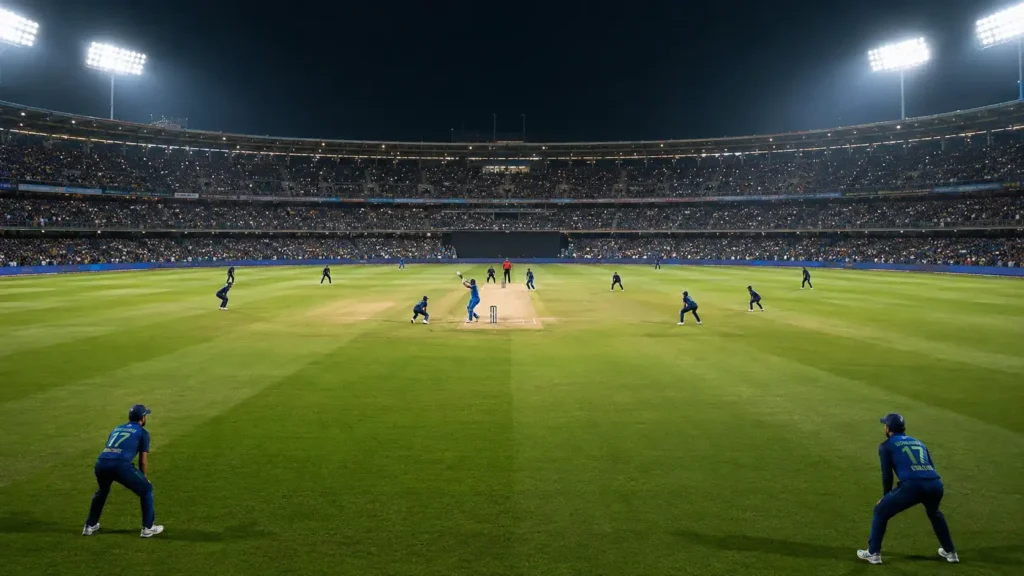
Powerplay Rules in Cricket Explained
Cricket is one of the most exciting sports in the world, and one rule that often creates curiosity among new fans is the Powerplay. Whether you watch IPL, T20 World Cup, ODI World Cup, or international matches, commentators frequently mention the Powerplay. But what exactly does it mean?
In this guide, you’ll learn Powerplay Rules in Cricket, why they were introduced, how they work in T20 and ODI cricket, fielding restrictions, advantages, disadvantages, and many practical examples.
Table of Contents
What is Powerplay in Cricket? Are you beginner in Cricket
Powerplay is a specific period during a limited-overs cricket match when the fielding team must follow special field placement rules.
During the Powerplay, fewer fielders are allowed outside the 30-yard circle. This creates more scoring opportunities for batsmen and makes the game more exciting for spectators.
Simply put:
Powerplay = Fielding Restrictions + Aggressive Batting Opportunities
Why was Powerplay Introduced?
The International Cricket Council (ICC) introduced the Powerplay to make one-day and T20 cricket more entertaining.
Its objectives include:
- Increase scoring opportunities
- Encourage attacking cricket
- Reduce defensive field placements
- Improve entertainment value
- Create excitement from the beginning of the innings
Powerplay Rules in T20 Cricket
A T20 innings consists of 20 overs.
Duration
The first 6 overs are called the Powerplay.
Fielding Restriction
Only 2 fielders are allowed outside the 30-yard circle during these six overs.
After the Powerplay
From over 7 to 20:
- Up to 5 fielders can be placed outside the circle.
Example
If India is batting:
- Overs 1–6 = Powerplay
- Overs 7–20 = Normal fielding rules
Because only two fielders are outside the circle during the first six overs, batters often play attacking shots to maximize runs.
Powerplay Rules in ODI Cricket
A One Day International (ODI) consists of 50 overs.
Overs 1–10
- Maximum 2 fielders outside the circle.
Overs 11–40
- Maximum 4 fielders outside the circle.
Overs 41–50
- Maximum 5 fielders outside the circle.
This phased approach balances aggressive batting with strategic bowling.
Is There Powerplay in Test Cricket?
No.
Traditional Test cricket does not have a Powerplay system.
Field placements in Test matches are determined entirely by the captain’s strategy.
Fielding Restrictions Explained
During the Powerplay:
- Most fielders stay inside the 30-yard circle.
- Only a limited number can patrol the boundary.
- Captains must carefully choose where those boundary fielders stand.
This often leaves gaps in the outfield, encouraging attacking strokes.
Advantages of Powerplay
For Batters
- Easier to hit boundaries
- More gaps in the field
- Faster scoring opportunities
- Better chance to build momentum
For Bowlers
Powerplay is not only beneficial for batters.
Swing bowlers often take advantage of the new ball by:
- Generating extra pace
- Producing swing movement
- Taking early wickets
Challenges During Powerplay
Powerplay can also be risky.
Batters often:
- Play aggressive shots too early
- Lose wickets quickly
- Face high-pressure bowling
Captains must decide whether to attack or preserve wickets.
Best Powerplay Strategies
Batting Team
- Attack loose deliveries
- Rotate strike regularly
- Avoid unnecessary risks
- Build a strong opening partnership
Bowling Team
- Bowl disciplined line and length
- Use swing effectively
- Keep attacking field placements
- Target early wickets
Famous Powerplay Performances
Some memorable Powerplay performances include:
- India dominating Powerplay overs in ICC tournaments
- England’s aggressive T20 batting approach
- Australia’s attacking starts in World Cups
- IPL franchises regularly scoring 60–80 runs in the first six overs
These explosive starts often shape the outcome of the match.
Common Mistakes Beginners Make
- Thinking Powerplay exists in Test cricket
- Assuming Powerplay lasts the same in every format
- Believing batting is always easier
- Ignoring bowling strategies during Powerplay
Understanding these differences helps new fans enjoy cricket even more.
Quick Comparison
| Format | Powerplay Overs | Fielders Outside Circle |
|---|---|---|
| T20 | 1–6 | 2 |
| ODI | 1–10 | 2 |
| ODI | 11–40 | 4 |
| ODI | 41–50 | 5 |
| Test | No Powerplay | No Restriction |
- IND vs PAK Live Streaming: भारत-पाकिस्तान एशियन गेम्स फाइनल कहां देखें? जानें TV चैनल और लाइव स्ट्रीमिंग
- Frequently Asked Questions
- Frequently Asked Questions
- Frequently Asked Questions
- IND vs WI LIVE मैच कब, कहां और कैसे देखें? कोहली-रोहित समेत युवा खिलाड़ियों पर नजरें
FAQs
What is Powerplay in cricket?
Powerplay is a period in limited-overs cricket where fielding restrictions apply, allowing fewer fielders outside the 30-yard circle.
How many overs are in a T20 Powerplay?
The first 6 overs.
How many overs are in an ODI Powerplay?
The first 10 overs, followed by two additional fielding restriction phases.
Is there Powerplay in Test cricket?
No. Test cricket does not use the Powerplay system.
Why is Powerplay important?
It creates exciting cricket by encouraging attacking batting while giving bowlers opportunities with the new ball.
Conclusion
Powerplay is one of the most exciting parts of modern limited-overs cricket. It creates a perfect balance between aggressive batting and attacking bowling, making T20s and ODIs more entertaining for players and fans alike.
Whether you’re new to cricket or simply looking to understand the rules better, knowing how the Powerplay works will help you enjoy every match with greater insight.